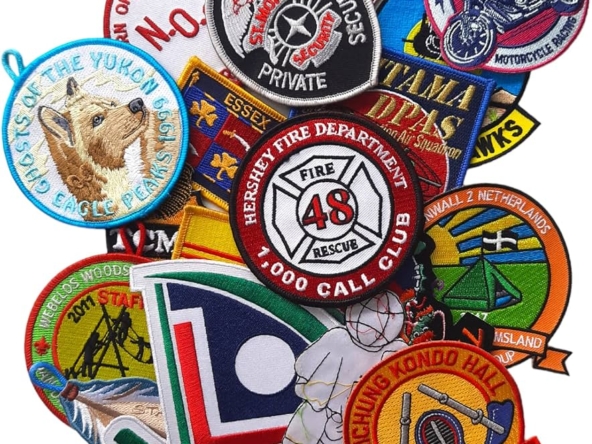
Walk into any uniform store, sports club, or even a coffee shop with a “staff” jacket hanging by the door, and you’ll probably spot one thing they all have in common: a patch. Not a sticker, not a printed logo, but an actual embroidered patch stitched onto fabric. There’s something about the texture and the raised thread that just says “this was made properly.” In a world where everything digital feels disposable, a good patch still feels permanent.
That permanence is exactly why custom embroidery patches have quietly stayed relevant for decades, even as printing technology has gotten cheaper and faster. Businesses across Canada, from small local shops to national organizations, keep coming back to embroidery because it does something printing simply can’t: it turns a logo into a physical object people actually want to keep, wear, and show off.
The Patch Isn’t Just Decoration Anymore
A lot of people assume patches are mostly for the military, motorcycle clubs, or maybe Scouts groups. And sure, those are classic uses. But if you look around today, patches have crept into almost every corner of Canadian business and community life.
Restaurants put them on chef coats. Breweries stitch them onto hats as a way to build a loyal following. Youth sports leagues use them to mark championship seasons. Emergency services rely on them to identify units and ranks at a glance. Even fashion labels have leaned hard into embroidered patches as a design element, sewing them onto denim jackets and streetwear as a statement piece rather than a functional badge.
What ties all of this together is identity. A patch says “I belong to this group” or “this product is legitimate” in a way that’s hard to fake with a printed label. It has weight, both literally and in how people perceive it.
Why the Details Matter More Than People Think
If you’ve never ordered embroidery patches before, it’s easy to assume they’re all more or less the same — just fabric with a logo stitched on. In reality, the difference between a patch that looks cheap and one that looks premium comes down to a handful of details most people never think about until they see them side by side.
Thread quality is one of the biggest factors. Lower grade threads fray, fade in the sun, and lose their sheen after a few washes. Good embroidery thread holds its colour and shine for years, even on patches that get washed weekly on a work uniform.
The backing fabric matters just as much. Twill fabric is the industry standard for a reason — it’s tight, stable, and gives the stitching something solid to grip onto so the patch keeps its shape instead of curling at the edges over time.
Then there’s the stitch density and digitizing work, which is really the technical backbone of the whole process. Before a single thread is sewn, the artwork has to be digitized — converted into a stitch file that tells the embroidery machine exactly where to go, how dense to stitch, and where to leave gaps for fine detail. A rushed or poorly digitized file can turn a crisp logo into a blurry mess once it’s actually stitched. This is honestly where a lot of cheaper patch suppliers cut corners, and it shows the moment the patch arrives.
Backing Options: The Practical Side of Patches
One thing people often overlook until they’re mid-order is the backing type, which really depends on how and where the patch will actually be used.
Sew-on backing is the most traditional and most durable option, ideal for uniforms and workwear that need to survive years of wear and washing.
Iron-on backing works well for lighter fabric applications where a permanent, low-effort attachment method is preferred, though it’s generally better suited to fabrics that can handle heat.
Velcro backing has become hugely popular for tactical gear, emergency services, and anything where patches need to be swapped out regularly — think interchangeable name patches or rank insignia.
Adhesive backing is a quick, no-sew option, often used for temporary events or promotional giveaways.
Magnetic backing is a smart choice for items where you don’t want to damage the fabric at all, like leather jackets or delicate garments.
Choosing the right backing isn’t just a technical detail — it actually determines how practical the patch is for its intended use, and a good manufacturer should walk you through this rather than just defaulting to whatever’s easiest for them to produce.
What Businesses Should Actually Look For in a Patch Supplier
If you’re a business owner or organizer looking to order patches for the first time, here’s the honest truth: the market is flooded with options, and not all of them are equal. A few things separate the suppliers worth working with from the ones you’ll regret choosing.
First, look for a company that offers free design assistance rather than charging you extra just to clean up your artwork. Most businesses don’t come in with a print-ready file, and a supplier that helps translate your logo into something embroidery-friendly saves you a lot of back-and-forth frustration.
Second, pay attention to turnaround time. Custom orders, especially for events or seasonal launches, often come with tight deadlines. A supplier that’s upfront about production timelines — and actually hits them — is worth far more than one offering the lowest price but vague shipping promises.
Third, ask about quality control. Reputable manufacturers inspect every batch before it ships, catching thread inconsistencies, sizing errors, or colour mismatches before they become your problem.
This is actually the space where a company like Stitch Patches CA has built its name. Based out of Edmonton, Alberta, and founded by Dawood Ali, the company has grown into one of Canada’s more established custom embroidery patch producers, now handling over 900 custom orders every month. That kind of volume doesn’t happen by accident — it comes from consistently delivering patches that businesses, schools, sports clubs, and emergency services trust enough to reorder from month after month. Their process covers the full range of customization, from shape, size, and thread colour to all five backing types mentioned above, giving customers flexibility whether they’re outfitting a hockey team or a whole company’s workwear line.
Small Orders Matter Too
It’s worth mentioning that you don’t need to be a large organization to benefit from custom patches. Plenty of individuals order small batches for personal projects, family businesses, hobby clubs, or even as gifts. A good supplier treats a 20-piece order with the same care as a 2,000-piece one, because reputation is built one satisfied customer at a time, not just on the size of the invoice.
The Bottom Line
Custom embroidery patches have survived every wave of new marketing technology because they solve a problem digital branding never quite figured out — they give people something tangible to wear with pride. Whether it’s a fire department badge, a brewery’s hat patch, or a jacket for a local sports league, the craftsmanship behind a well-made patch says more about an organization than most digital ads ever could.
If you’re considering ordering patches for your business, team, or organization, take the time to look into the thread quality, backing options, and turnaround reliability of whoever you choose. Companies like Stitch Patches CA in Edmonton have shown that consistent quality, at scale, is very much possible in the Canadian market — and for anyone who’s ever had a patch fall apart after a few washes, that consistency makes all the difference.